Artificial Eyelashes: Types, Quality Guide and How to Apply Them
6 November 2026 · Jyoti Limbu
Explore types of eyelashes, learn how to spot good quality, and follow a step-by-step guide to apply artificial eyelashes safely, with price tips for Nepal.
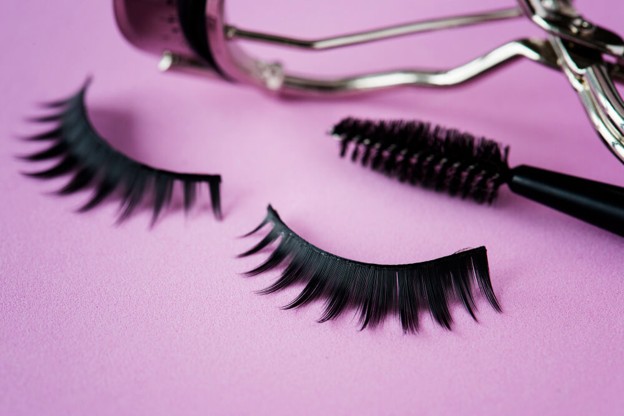
Two pairs of eyelashes can look identical in the packet and behave completely differently on your eye. One sits light and soft on the lid, and you forget it's there. The other feels scratchy, lifts at the corners, and has you reaching for the remover by lunchtime.
That gap is why choosing eyelashes matters as much as applying them. This guide covers the main types of artificial eyelashes, how to tell a good pair from a bad one, what affects the price in Nepal, and how to put them on, take them off and store them. It's written with first-timers in mind. But if you've worn lashes for years, the quality section might still change what you buy.
In this guide
● What Are Artificial Eyelashes?
● Types of Artificial Eyelashes
● Synthetic vs. Mink Eyelashes
● Magnetic Eyelashes in Nepal
● Eyelash Styles and Their Effects
● How to Choose the Right Eyelashes
● What Makes a Good Artificial Eyelash?
● Eyelashes Price in Nepal
● What You Need Before Applying Artificial Eyelashes
● How to Apply Artificial Eyelashes: Step-by-Step
● Common Mistakes to Avoid
● Tips for Making Artificial Eyelashes Look Natural
● How to Remove Artificial Eyelashes Safely
● How to Clean, Care for and Store Artificial Eyelashes
● Frequently Asked Questions
What Are Artificial Eyelashes?
Artificial eyelashes, also called fake eyelashes, are lashes you attach along your own lash line. The lash line is the edge of the eyelid where your natural lashes grow. They're made from fibres such as synthetic strands or, in some products, hair or fur.
Unlike your natural lashes, they're temporary. They add length, volume or shape, and they come off when you take them off. Lash extensions are a different thing: a trained technician attaches those to your natural lashes with semi-permanent glue.
Everything below is about the temporary kind, the ones you can put on and remove at home.
Types of Artificial Eyelashes
The names on the packet can sound confusing, so here's what each type actually is.
Strip eyelashes
A strip lash is a full row of hairs on one thin band. You trim the band if needed, add lash glue and press it along your lash line. Strips are quick to apply and come in plenty of styles.
Good for: beginners and special occasions. Watch out for: a visible band if the placement is rough.
Individual eyelashes
These are single strands, applied one at a time. You stick each strand near your own lashes and take it off after wearing. They can look very natural, but they take the most time and skill.
Good for: filling gaps or creating a subtle finish.
Safety note: The American Academy of Ophthalmology warns that salon-applied semi-permanent extensions carry risks, including allergic reactions, infection and natural lash loss. If you go that route, choose a trained professional in a clean salon and ask what adhesive they use.
Cluster eyelashes
Clusters are small bunches of a few hairs. You glue them in sections along the lash line, so you can add fullness only where you want it, such as the outer corners. They're easier than single strands but slower than a strip, and uneven spacing can look messy.
Good for: people who enjoy a little practice and a custom look.
3D eyelashes
3D eyelashes have fibres layered at different angles on the band, which gives depth and a fluffy, textured finish. "3D" is a marketing term, not a fixed standard, so check the photos and description before you buy.
Good for: evening looks and photos. Watch out for: a thicker band that may feel heavier.
Mink eyelashes
Mink eyelashes are known for a soft, feathery look. The word can describe a style or a material, and it doesn't always mean real fur (more on that below). Most are strips applied with glue.
Good for: a soft, voluminous finish. Watch out for: unclear material labels.
Magnetic eyelashes
These attach with tiny magnets instead of lash glue. They get their own section further down.
Synthetic vs. Mink Eyelashes
Appearance and texture: Synthetic lashes can look more uniform and sometimes a little shiny. Mink-style lashes tend to look softer and more tapered, though the feel varies by brand.
Maintenance: Handle both gently and follow the seller's care instructions. How long a pair lasts depends mostly on its quality and on how carefully you remove and store it.
Price: Lashes sold as mink often cost more than basic synthetic ones, but the price depends on the seller, brand and material.
Not every product marketed as mink contains real mink fur. Some sellers use the word for synthetic fibres made to feel like fur, often called "faux mink". If the material matters to you, for ethical or allergy reasons, ask the seller before you buy.
Eyelash Styles and Their Effects
Type tells you how a lash is attached. Style tells you how it looks once it's on. Here are the common ones, along with the styles we make at Jo Beauty.
Natural: Short to medium and evenly spaced. It adds definition without changing your look, so it suits everyday wear. Jo Beauty's Classic Natural and Natural Eye Lash Short Length lashes belong to this group.
Wispy: Feathery, with uneven lengths for a soft, textured finish. Jo Beauty's Natural Wispy Lashes follow this style.
Voluminous: Dense lashes that create fullness. They're good with evening makeup.
Dolly: Rounder and fuller, with the longest hairs towards the centre of the eye to make it look wider. Jo Beauty's Dolly Eye Lash Long Length is made for this look.
Dramatic: Long and thick, for a bold effect at weddings or photoshoots.
Cat-eye: Longer at the outer corners to lift and stretch the eye. Jo Beauty's Cat Eye Lashes use this shape. Half lashes, such as Jo Beauty's Half Lashes, are made for adding volume and lift at the outer corners.
Want to see how these look on the band? You can browse our natural, wispy, dolly, cat-eye and half lashes side by side.
How to Choose the Right Eyelashes
Eye shape: Treat this as a starting point, not a rule, because eye shape is only one factor. Hooded or small eyes often look good with light, wispy lashes. Round eyes can look longer with extra length at the outer corner. Almond eyes suit most styles.
Makeup look: Soft makeup pairs well with natural lashes. Bold liner can handle more volume.
Experience level: Start with strips. Try clusters once you're comfortable.
Comfort and ease: A light, flexible band is easier to wear. You can always trim the strip to fit your eye.
Occasion: Natural suits everyday wear. Fuller or dramatic styles suit weddings, Dashain gatherings and parties.
What Makes a Good Artificial Eyelash?
Most people judge lashes by the photo on the box. The photo shows the best case. What really matters is how a pair looks, feels and wears once it's on your eyelid.
Here's what to check, and what a poor pair tends to look like. These checks work for any brand, ours included.
The band
The band is the part that sits on your lid, so start there. A good band is thin, flexible and smooth. Bend it gently around your finger. It should curve without kinking, and it shouldn't spring back stiffly like a piece of wire.
A poor band is thick, rigid or bumpy. You'll often spot small blobs of glue or knots where the hairs are fixed. Those bumps are usually what dig into your lid and make a pair feel scratchy after an hour.
The fibres
Run a fingertip lightly over the hairs. Good fibres feel soft and a little springy, and they bounce back after you bend them. They're evenly spaced and tapered, so the tips get finer, much like natural lashes.
Poor fibres feel crunchy or wiry. Some look plasticky and shiny under a light. Others have blunt, clumped or sharp-looking tips, or hairs that come away in your fingers when you handle the pair. Any of these can poke your lid or your eye.
Give the pair a quick sniff too. A strong chemical smell doesn't prove anything on its own. But it's a fair reason to be cautious with something that sits this close to your eyes.
Shape and curl
Hold the pair up and look at the curve. A good lash keeps a gentle, even curve and holds it after you've bent the band. Both lashes in a pair should match in length and fullness, like mirror images.
Warning signs: one lash noticeably longer or fuller than the other, hairs pointing in odd directions, or a curve that's already gone flat in the box. Flat lashes won't follow your lash line, so the ends lift. Lashes that go limp after a single wear won't survive reuse either.
Weight and comfort
Good lashes feel almost weightless. Rest a pair on your fingertip and you should hardly notice it. Once it's on your eye, you should forget it's there.
If the pair feels heavy, or your lid feels pulled down within a few minutes, the band is too thick or the fibres are too dense for your eye. A dramatic style is naturally fuller, so that alone isn't a flaw. But a well-made dramatic pair still feels light for its size.
Packaging and hygiene
Lashes go right next to your eyes, so how they've been stored matters. A good pair arrives in a clean, closed tray, with each pair held separately and the hairs untangled.
Be wary of pairs that arrive loose, crushed, dusty or tangled together. Any dirt on a lash ends up on your eyelid.
Good vs. poor quality at a glance
Good quality | Poor quality | |
Looks | Thin, even band; matching pair; tapered, evenly spaced hairs | Thick or lumpy band; one lash longer than the other; clumped or blunt tips |
Feels | Soft, springy fibres; light on the fingertip | Wiry or crunchy hairs; stiff band; heavy |
Smells | Little to no smell | Sharp chemical smell |
Wears | Hugs the lash line and stays comfortable for hours | Lifts at the corners, scratches or feels heavy within the hour |
Lasts | Keeps its shape across several wears with care | Loses its curve or sheds hairs after one wear |
A 60-second check before you buy
If you're ordering online, which most of us do, run this check the moment the parcel arrives, before any glue comes out. Keep the packaging until you're sure.
Look at the pair in good light. Do both lashes match?
Bend the band gently around your finger. Does it curve smoothly?
Run a fingertip over the hairs. Are they soft, and do they stay put?
Rest the pair on your fingertip. Does it feel light?
Give it a sniff. Is there any sharp chemical smell?
Check the tray and packaging. Is everything clean and intact?
If a pair fails two or more of these, we'd skip it, whatever it cost. Before you pay for any online order, read the seller's return policy and look for real customer photos, not just studio shots.
When a bad eyelash becomes a safety problem
Even a good pair can irritate some eyes, and the glue is often the culprit. Stop using the lashes or the adhesive straight away if your eyes burn, itch, swell or turn red. FDA's eye cosmetic safety guidance says the same: stop if irritation starts, and see a doctor if it doesn't settle.
It also advises skipping eye makeup altogether while you have an eye infection or inflamed skin around the eye. And it's a good reminder to wash your hands first and keep any tools clean.
Eyelashes Price in Nepal
Prices vary, and there's no single fixed rate. These factors usually explain the difference:
● Material: Synthetic fibres, hair or fur-like fibres cost different amounts to make.
● Construction: Layered 3D lashes and handmade lashes involve more work than a basic strip.
● Reusability: A pair that survives several wears can cost less per use than a cheaper one-time pair.
● Brand and seller: Import costs, packaging and what's included, such as glue or tweezers, all matter.
Compare the cost per pair, not the box price. A box with several pairs may offer better value per wear than a single pair, even if the upfront price is higher.
And a very cheap pair that fails the quality check above isn't a bargain. It's a pair you'll end up replacing.
What You Need Before Applying Artificial Eyelashes
Lay everything out first, so you're not hunting for tweezers with glue on your fingers.
● A pair of artificial eyelashes, ideally a soft, natural style for your first try
● Eyelash adhesive made for lashes, clear or dark
● Tweezers
● Small, sharp scissors
● An eyelash curler
● A mirror and good light, ideally near a window
One firm rule: never use nail glue or super glue near your eyes. They aren't made for skin that thin.
How to Apply Artificial Eyelashes: Step-by-Step
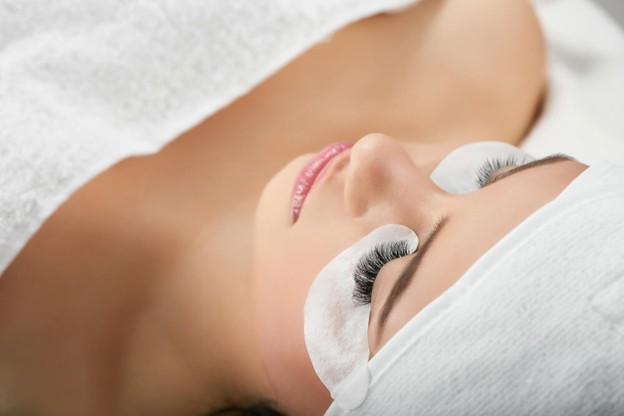
Do your eyeshadow first, so powder doesn't fall onto wet glue. If you wear contact lenses, put them in before you begin.
Step 1: Prepare your natural eyelashes. Wash your hands first. Then start with clean, dry lashes, free of oil and old mascara. Curl them, pressing at the base and then moving up. Skip heavy mascara for now, since clumpy lashes make it harder for the band to sit well.
Step 2: Measure the artificial eyelashes. Hold the strip along your lash line. The band should run from the inner corner of your eye to the outer corner, and no further.
Step 3: Trim them if necessary. If the strip is too long, trim from the outer end, a couple of millimetres at a time. Cut the band, not the hairs. Then bend the band gently into a curve by pressing it around a pen or your fingertip, so it hugs the shape of your eyelid.
Step 4: Apply a thin layer of eyelash adhesive. Run a thin line of glue along the band. Too much glue squeezes out, turns white or stringy, and slides the lash around.
Step 5: Wait until the glue becomes tacky. This is the step beginners skip. Wait for the adhesive to turn tacky before you place the strip. That usually takes around 20 to 30 seconds, though the exact time depends on the product, so follow the manufacturer's instructions. Press too early and the lash slides.
Step 6: Position the lashes along your natural lash line. Hold the lash with tweezers near the middle of the band. Look down into a mirror held below eye level. Position the band as close as possible to your natural lash roots, attaching it to the skin just above the lash line. Keep adhesive off your natural lashes. Set the middle first.
Step 7: Secure the outer and inner corners. Press the outer corner down first, then the inner one. Stop a millimetre or two short of the inner corner, since that end tends to poke. Hold for a few seconds while the glue grips.
Step 8: Blend the natural and artificial eyelashes. Once the adhesive has dried, gently squeeze your natural and artificial lashes together so they blend. If you need to, add a light coat of mascara, but go easy, especially if you plan to reuse the pair. Then use a fine liner or a dark kajal to cover the band. Don't curl your lashes again after this. The curler can pull the strip loose.
Common Mistakes to Avoid
● Using too much glue. A thin line is enough. Extra glue means a mess and a harder removal.
● Not waiting for the glue to turn tacky. If your lashes keep sliding, this is almost always why.
● Skipping the measuring. Too long pokes your outer corner. Too short lifts at the ends.
● Placing the band too high. It should sit right at the lash line, not up on the lid, where it feels heavy and lifts within the hour.
● Pulling lashes by the hairs. Hold the band with tweezers, not the fine fibres, or you'll bend and thin the lash.
● Sleeping in them. Take strip lashes off before bed to avoid irritation and pulling on your natural lashes.
● Sharing a pair. Eye makeup carries bacteria, so don't share lashes or glue, not even with your best friend.
Tips for Making Artificial Eyelashes Look Natural
Pick a length close to your own lashes. For a subtle lift, cut the strip in half and use only the outer section.
A thin line of dark liner hides the band, and dark glue works well with it. Save bolder styles for evenings and events. A cat-eye pair lifts the outer corner beautifully at a party, though it's a lot for a day at college.
Practise on a spare pair. A multi-pair box lets you get the trim and placement right before the big day. Your first attempt rarely looks like your third.
And if dark circles were half the reason you reached for lashes, a concealer formula that suits your skin type under the eyes finishes the look.
How to Remove Artificial Eyelashes Safely
Never rip them off. Pulling can take your own lashes with it and irritate the eyelid.
Use an eyelash adhesive remover or an eye-safe makeup remover to soften the adhesive. Follow the product instructions and keep the remover out of your eyes. Then gently loosen the band from the outer corner. If it resists, stop and add more remover. Finish by cleaning the area gently with micellar water or your usual cleanser.
How to Clean, Care for and Store Artificial Eyelashes
Peel the dried glue off the band with tweezers. Wipe the band lightly with a cotton bud dampened with a little remover, then let the lashes air dry. Don't soak them or scrub the fibres.
Put them back in their original tray or a small case, away from heat and damp. That matters in Nepal, since monsoon humidity can warp the band.
Replace a pair when it bends out of shape, collects stubborn glue, goes stiff, or irritates your eyes.
Frequently Asked Questions
What is the easiest type of artificial eyelash for beginners? Strip lashes. They come as one band, so you apply them in one go. Choose a light, natural style and trim it to fit.
How can I tell if artificial eyelashes are good quality? Look for a thin, flexible band, soft and springy fibres, and a matching pair that feels light on your fingertip. A thick, lumpy band, wiry hairs or a strong chemical smell are warning signs.
Are mink eyelashes made of real mink? Not always. "Mink" can describe a soft, fluffy look made with synthetic fibres. Ask the seller what the lashes are made of.
Are magnetic eyelashes better than glue-on lashes? Neither is better for everyone. Magnetic lashes avoid lash glue but can be fiddly. Glue-on lashes are simpler to use but need adhesive.
Can I use any glue to put on artificial eyelashes? No. Use adhesive made specifically for eyelashes. If your eyes burn, itch or swell, remove the lashes and stop using that glue.
Do artificial eyelashes damage natural lashes? They don't have to. The risk comes from rough application, heavy glue and pulling, so keep it gentle.
Can I wear artificial eyelashes with contact lenses? Many people do. Put your lenses in before applying the lashes, take the lashes off before removing the lenses, and keep adhesive and remover away from the lenses themselves. Follow your lens-care instructions, and if your eyes feel irritated, take everything out and stop.
Can artificial eyelashes be reused? Some can, depending on quality and care. Remove old glue, store them dry, and follow the seller's instructions. Replace them when they lose shape.
Conclusion
The best eyelashes aren't always the longest or the fluffiest. They're the ones that suit your eyes, match your skill level, and pass a simple feel test before they go anywhere near your lid.
Start with a natural strip, check the band and fibres, take your time with the glue, and be gentle taking them off. Do that, and your first pair will look a lot better than you expect.
When you're ready to try a pair, you'll find our full range on the Jo Beauty website.